

Material stability, precise control over biomimetic structure, and the reproducibility of the experiments are key to succeed in bone regeneration, biomaterials development, and preclinical animal studies. Materials for bone repair on the market often have uneven porosity distribution, unstable degradation rate, and batch inconsistency. They result in inconsistent in vivo responses and lead to unreliable and poorly reproducible data, which, consequently, impedes research progress.
EPRUI Biotech provides you with high-quality β-tricalcium phosphate (β-TCP) scaffolds for life science research, such as animal model experiments, and other preclinical mechanism investigations. Our β-TCP scaffolds are customized for in vivo preclinical studies (e.g., bone defect animal models) as well as in vitro osteogenicity studies with stem cells. Our β-TCP scaffolds are characterized by a standardized biomimetic architecture, controllable degradation rate, high biosafety, and exceptional batch-to-batch consistency. These features help you get reliable, credible, and reproducible results in your studies.
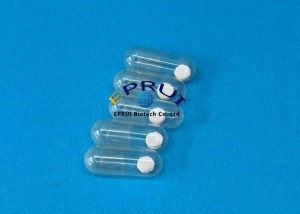
Biomimetic Design Suitable for In Vitro Studies and In Vivo Animal Experiments
β-TCP has an inorganic composition that is similar to minerals in animal bones and human bones. Regarded as non-cytotoxic and poorly immunogenic, it is a great choice for cell culture and in vivo animal model experiments. Our β-TCP scaffolds are homogeneous. They have a precisely graded porous biomimetic design that mimics the interconnected porous structure of trabecular bone. The interconnected channel parameters, including pore size and porosity, are controllable and standardized. The interconnected channels offer many advantages for cell studies and animal experiments. They improve cell seeding and migration, nutrient and waste transportation, vascularization, bone ingrowth and osteoconduction, and creates a microenvironment in which osteoinduction can occur.
Controllable Degradation Rate Matches Animal Experiment Timeline and Osteogenesis Observation Period
A controllable degradation rate of β-TCP scaffold is important in animal bone-defect models. It must match the bone-healing timeline of the animal model. If the scaffold degrades too rapidly, it loses structural integrity, collapses, and is replaced by soft tissue ingrowth and fibrous encapsulation rather than new bone. When this occurs, the animal model fails. If the scaffold degrades too slowly, it leaves radiopaque and hard residual that masks new bone on micro-CT and causes tearing and voids during histological processing. The degradation rate of our β-TCP scaffolds is controlled through strategies including sintering to match the bone-healing timeline. It fits the typical observation period (i.e., 4–12 weeks) used in animal model experiments.
After implantation, the scaffolds degrades steadily and release calcium and phosphate ions in a sustained manner. These ions support osteoblast proliferation and differentiation, contribute to local mineral deposition, and influence angiogenesis and immune response. The scaffolds gradually degrade and are replaced by newly formed bone, leaving no foreign residual materials or inflammation that could interfere with experimental observation. The way the scaffolds support bone regeneration recapitulates the bone repair cascade as closely as possible. Therefore, our scaffolds helps improve the reliability and precision of micro-CT, histological, and immunohistochemical data.
Standardized and Customizable Architectural Parameters to Cover the Full Spectrum of Research Scenarios
With precise production techniques specifically designed for scientific research, our β-TCP scaffolds exhibit consistent mechanical properties, porosity, and structure. The parameters of our β-TCP scaffolds are consistent across batches. Our scaffolds steadily support bone regeneration in animal defect experiments, preventing early collapse and bone deformation. Our scaffolds are suitable for various irregular critical-sized bone defects and offer good shape adaptability for defect fitting. They help improve the success rate of bone-defect model experiments and reduce experimental variability. β-TCP scaffolds can also act as excellent delivery vehicles for growth factors and therapeutic agents. The scaffolds can be loaded with osteogenic factors, anti-inflammatory and antiseptic drugs to support functionalization studies, enabling sustained release. They are suitable for a wide range of research scenarios, including osteogenic differentiation of stem cells, rat calvarial and tibial critical-sized defect models, rabbit radial and maxillofacial bone repair studies, ectopic ossification mechanism investigations, evaluation of bone-repair drugs, and pilot testing of new composite materials for bone repair. We also offer customized scaffolds to meet your need through precise control of size, porosity, and morphology.
Rigorous Quality Control to Support Reproducibility and Reliability of Research Data
EPRUI Biotech is dedicated to the research, design and production of research-grade bioceramics. Our quality control system is tailored to the needs of universities, research institutes, and pharmaceutical R&D groups. Our β-TCP scaffolds show minimal intra-batch variation and consistent batch-to-batch performance within defined acceptance criteria. We keep our scaffolds consistent by controlling manufacturing, sintering, and packaging processes through standard operation procedures, in-process checks, sampling across the production run, so that porosity, interconnectivity, degradation rate, and mechanical strength remain within specification. Each batch of our scaffolds have a Certificate of Analysis. The Certificate of Analysis parameters support quality and compliance documentation, reduce confounding variables, improve reproducibility, and help you complete your studies with reliable and credible data.
EPRUI Biotech’s research-grade β-TCP scaffolds are designed for fundamental bone regeneration studies and preclinical animal model experiments. Its biomimetic design, controllable degradation rate, standardized yet customizable parameters, and rigorous quality control help researchers advance life science research through biomaterial innovation, and preclinical testing, and support high-quality academic achievements and successful technology translation.