

The core of bone regeneration medicine, biomaterial development, and preclinical animal studies lies in stable material performance, controllable biomimetic structure, and high experimental reproducibility. Common bone repair materials on the market often suffer from uneven porosity, fluctuating degradation, significant batch-to-batch variation, and unstable in vivo responses, leading to biased animal data, poor repeatability, and delayed project progress.
EPRUI Biotech has specifically developed research-grade beta tricalcium phosphate (β-TCP) porous artificial bone scaffolds for life science research, animal model experiments, and preclinical mechanism investigations. Featuring standardized biomimetic architecture, controllable in vivo degradation, high biosafety, and exceptional batch-to-batch uniformity, these scaffolds are tailored for critical-sized bone defect models in rats and rabbits, as well as in vitro stem cell osteogenic studies. They provide academic laboratories, research institutes, and biopharma R&D teams with a standardized, quantifiable, reproducible, and literature-comparable experimental material solution.
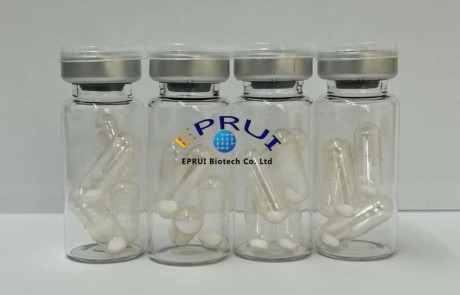
Highly Biomimetic Tissue Architecture – Adapted for In Vitro Cellular and In Vivo Animal Osteogenic Studies
The physicochemical properties of beta TCP are highly homologous to the inorganic mineral components of natural bone in both humans and experimental animals, conferring excellent biocompatibility with zero cytotoxicity, zero immune rejection, and low inflammatory response—fully meeting the stringent requirements of cell culture and in vivo implantation studies. Unlike conventional heterogeneous experimental materials, this research-grade bea TCP scaffold features a precision gradient porous biomimetic design that replicates the interconnected pore structure of cancellous bone. Key parameters—pore size, porosity, and interconnecting channel geometry—are standardized and controllable, perfectly matching the microenvironmental demands for stem cell adhesion, proliferation, differentiation, and angiogenesis. It serves as an ideal scaffold carrier for investigating osteoconduction and osteoinduction mechanisms.
The standardized three-dimensional interconnected porous architecture stably supports the colonization and growth of bone marrow mesenchymal stem cells and osteoblasts, ensures efficient nutrient perfusion and metabolic exchange, and effectively promotes ingrowth of new blood vessels and deposition of new bone tissue in vivo. In studies of ectopic ossification, in situ critical-sized bone defect repair, and bone remodeling mechanisms, this scaffold consistently exhibits both osteoconductive and osteoinductive effects, with clear experimental phenomena and reproducible results that fully align with the data standards required for high-impact publications.

Controllable Degradation Rate – Matched to Animal Experiment Timelines and Osteogenic Observation Requirements
Animal bone defect experiments impose stringent demands on material degradation kinetics: excessively rapid degradation leads to defect collapse and experimental model failure, while overly slow degradation interferes with new bone formation observation and compromises histological staining and Micro-CT data analysis. EPRUI’s research-grade β-TCP scaffold, through precise formulation and sintering process control, achieves degradation rates that accurately match the animal osteogenic timeline, accommodating mainstream 4–12 week experimental observation periods.
Following implantation into rats, rabbits, and other animal models, the scaffold degrades at a steady rate with sustained release of calcium and phosphate osteogenic ions, continuously driving bone remodeling progression. As new bone tissue gradually matures, the material is synchronously resorbed, leaving no residual foreign matter or significant inflammatory interference at the experimental endpoint. This maximally preserves the authentic bone repair process, ensuring high precision and reliability of Micro-CT scanning, histological HE staining, immunohistochemistry, and bone volume fraction (BV/TV) quantitative analyses.
Standardized and Customizable Parameters – Covering Full-Spectrum Research Scenarios
Leveraging specialized precision preparation processes for research applications, this beta TCP artificial bone scaffold features stable mechanical properties, uniform pore parameters, and exceptional structural consistency, completely eliminating the common issues of batch-to-batch variation and structural irregularities found in conventional experimental materials. The product reliably supports animal defect models, preventing post-implantation collapse and deformation, while offering good plasticity to accommodate various irregular critical-sized bone defect modeling needs, ensuring high modeling success rates and controlled experimental variability.
Additionally, it exhibits excellent growth factor loading and drug sustained-release capabilities, allowing functional modification with osteogenic factors, anti-inflammatory, or antimicrobial agents for diverse research applications: in vitro stem cell osteogenic differentiation assays, rat calvarial/tibial critical-sized defect models, rabbit radial/maxillofacial bone repair studies, ectopic ossification mechanism investigations, drug efficacy evaluation for bone repair, and pilot experiments on novel composite bone materials—comprehensively covering both fundamental research and preclinical animal study requirements. Customization in size, porosity, and morphology is available to precisely match individualized project protocols.

Research-Grade Rigorous Quality Control – Ensuring Experimental Reproducibility and Data Reliability
EPRUI Biotech specializes in the R&D and production of research-grade bioceramic materials, having established a dedicated quality control system tailored for universities, research institutes, and pharmaceutical R&D teams. From high-purity raw material refining, precision molding and sintering, parameter calibration, to sterile packaging and batch sampling inspection, the entire process is standardized and controlled, rigorously locking in four core parameters—porosity, pore interconnectivity, degradation rate, and mechanical strength—ensuring zero within-batch variation and low inter-batch fluctuation. Each batch is accompanied by a comprehensive parameter report, meeting all regulatory requirements for project completion, publication, and experimental traceability, thereby completely eliminating data invalidation and experimental rework caused by material instability in research.
By empowering precise research with standardized materials and facilitating output with stable performance, EPRUI Biotech’s research-grade β-TCP artificial bone scaffold focuses on fundamental bone regeneration studies and preclinical animal models. With its highly biomimetic, highly stable, and highly reproducible characteristics, it provides reliable domestic research material support for life science research, biomaterial innovation, and preclinical product development, contributing to more high-quality academic achievements and successful technology translation.