
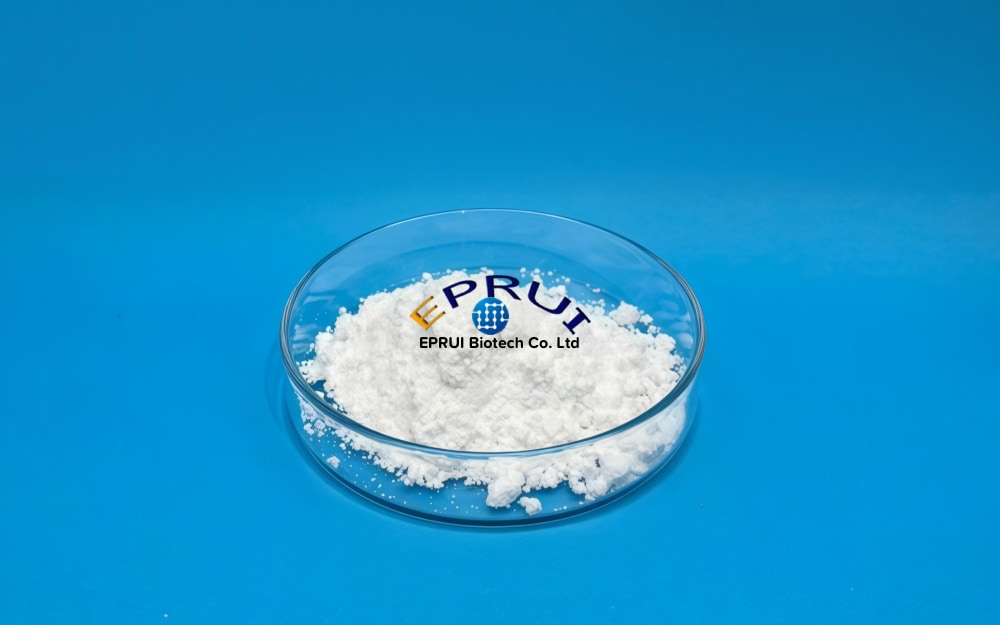
45S5 Bioactive Glass
Human beings’ teeth are a complex structure made of many different parts. Nano Hydroxyapatite (HA) is one of the building blocks that make up our tooth enamel, dentin, and cementum. The content of HAP is 65% in human skeleton, 70% in dentin and 95% in enamel.
This naturally occurring mineral gives our teeth and bones their hard and strong quality. However, plaque, as well as foods high in sugar and acidic drinks, can negatively affect your teeth by hurting tooth enamel.
EPRUI supplies food grade synthetic nano hydroxyapatite powder with proved safe quality and competitive price. Our nano HAP is 100% synthetic and animal origin free.
EPRUI Biotech Trusted By


















Specifications
| Item No. | Particle Size | Application Examples |
|---|---|---|
| EPRUI-45S5-2um | <2μm(1000-2000nm) | Dental desensitizer, Wound dressing |
| EPRUI-45S5-30um | <30μm | Professional Repair Toothpaste (e.g., Sensodyne with NovaMin) |
FAQs
1. What is HCA?
Hydroxycarbonate apatite (HCA) is essentially a carbonate-substituted hydroxyapatite. Its structure closely resemble the poorly crystalline, carbonate-containing apatite mineral in human bone and dentin. The inorganic part of human bone is not pure hydroxyapatite (Ca10(PO4)6(OH)2). It is carbonate-containing and calcium-deficient. The HCA layer formed by 45S5 mimics the carbonated apatite mineral of human bone, making the surface bone-like and supporting cell attachment, bone bonding, and integration rather than a strong foreign-body response.
2. How is an HCA layer formed?
The HCA layer is formed in a cascade of processes.
Ion exchange
In 45S5, there is a high proportion of Na2O (around 24.5%). Na2O is a network modifier, and it breaks Si-O-Si bridges and creates non-bridging oxygens. As a charge-compensating ion, Na+ is loosely held near the negatively charged non-bridging oxygens in the silicate network. This makes it mobile, so it can readily leave the glass surface when water enters. When 45S5 contacts liquids or body fluid, Na+ leaves the glass at the interface while H3O+ enters. This exchange consumes H+, raises local pH, and converts Si-O-Na+ sites into Si-OH groups. As the silicate network dissolves, Ca2+ and phosphate species are released from the bioactive glass into the local fluid. The ion-exchange and silicate-network hydrolysis cascade supports subsequent hydroxycarbonate apatite formation, while the associated local pH rise and ion release contribute to antibacterial effects.
Silica-rich layer formation
Ion exchange removes network-modifying ions from the glass surface. The local alkaline environment promotes hydrolysis of silicate bridges, creating silanol groups, and these silanol groups condense into a hydrated, polymerized silica-rich gel.
Calcium and phosphate precipitation
The silica-rich layer is negatively charged and hydrated. It electrostatically attracts Ca2+ from the fluid and provides heterogeneous nucleation sites. The local pH rise deprotonates phosphate (H2pO4- ->HPO42–>PO43-), which increases calcium phosphate supersaturation and favors amorphous calcium phosphate precipitation. In addition to ions released by 45S5, body fluids such as blood plasma contribute additional calcium, phosphate, and carbonate, which contribute to hydroxycarbonate apatite formation.
Crystallization
The amorphous, hydrated calcium phosphate (ACP) that initially precipitates on the silica-rich layer is metastable. It dissolves locally, reprecipitates, and dehydrated into poorly crystalline apatite while incorporating carbonate from body fluid to form HCA.
3. What is the key role of HCA?
The HCA layer is the key interfacial bridge between bioactive glass and host tissue:
- Chemical bonding: Calcium and phosphate species at the HCA surface can interact with active functional groups on collagen fibrils, creating a chemical interfacial association rather than a purely physical interlocking.
- Biocompatibility: Because its composition is similar to bone mineral, the HCA layer elicits a milder foreign-body response and can adsorb proteins such as fibronectin and bone morphogenetic protein (BMP), which promote osteoblast adhesion, proliferation, and differentiation.
- Mineralization: The HCA layer acts as a bone-mineral-like template that supports calcium phosphate precipitation and promotes bone regeneration.
- The HCA layer converts the bioactive glass surface into a bone-like interface; without it, the glass acts as a foreign body, but with it, the glass can support bone regeneration. 45S5 bioactive glass is widely used in dentistry and bone regeneration because it supports tissue regrowth and mineralization and contributes to antibacterial activity.
4. How does 45S5 contribute to antibacterial activity?
45S5 bioactive glass does not act as a classic antibiotic. Its antibacterial effect is physicochemical, and it is less likely to induce conventional antibiotic resistance.
- pH rise: Ion exchange raises local pH, and the resulting alkaline environment can compromise bacterial membranes, denature proteins, inactivate enzymes, and inhibit bacterial growth.
- Osmotic pressure & needle-like debris: The rapid release of ions increases extracellular solute concentration. This can draw water out of bacterial cells, disrupting membrane integrity and cell morphology. Needle-like 45S5 debris can physically damage bacterial cell walls, potentially causing leakage of intracellular contents, loss of membrane integrity, osmotic imbalance, and cell death.
- Occlusion of dentinal tubules: The HCA layer seals open dentinal tubules, forming a physical barrier that limits the movement of bacteria and other substances toward the deeper dentin and may reduce the risk of secondary infection.
5. Where are the main application areas of 45S5 bioactive glass?
45S5 bioactive glass is widely studied and applied in dentistry, bone regeneration, and wound care. Its ability to release bioactive ions and form a hydroxycarbonate apatite (HCA) layer makes it a promising material for tissue repair, mineralization, and regeneration.
1. Dentistry
Pulp-Dentin Complex Regeneration
45S5 bioactive glass promotes the odontogenic differentiation of dental pulp stem cells (DPSCs) and apical papilla cells (APCs) into odontoblast-like cells responsible for producing new dentin. It also upregulates growth factors associated with odontogenic differentiation and activates autophagy, supporting dentin mineralization. These properties make 45S5 a promising material for vital pulp therapy and pulp-dentin complex regeneration.
Dental Desensitization and Remineralization
Desensitizing gels, toothpastes, and other dental pastes containing 45S5 bioactive glass release calcium, phosphate, and silicate ions while increasing local pH. These processes promote HCA formation, occlude exposed dentinal tubules, and support dentin remineralization, helping reduce hypersensitivity associated with dental scaling, orthodontic treatment, and tooth wear.
Published clinical studies have reported reduced dentin hypersensitivity with toothpastes containing approximately 2.5–7.5% 45S5 bioactive glass, commercially known as NovaMin in certain toothpaste formulations.
Tooth Bonding and Repair
The incorporation of 10% 45S5 bioactive glass into self-etch dental adhesives has been shown to enhance micro-shear bond strength (μSBS) to both sound and hypomineralized enamel. The improvement remained stable after one year of water storage, suggesting potential applications in the dental repair of hypomineralized teeth.
Periodontal Repair and Implant Coatings
45S5 bioactive glass granules and pastes are used to fill periodontal bone defects, including furcation defects, to support alveolar bone regeneration. When applied as a coating on metallic dental implants, 45S5 bioactive glass may improve osseointegration compared with conventional hydroxyapatite coatings.
2. Bone Regeneration
Bone Grafting for Maxillofacial Defects
45S5 bioactive glass has been investigated as an alternative to autologous bone grafting for alveolar cleft repair in patients with cleft lip and palate.
A retrospective cohort study reported a five-year success rate exceeding 71% and a one-year radiographic success rate of approximately 84% for secondary alveolar cleft bone grafting (SABG) using 45S5 bioactive glass, indicating its potential in maxillofacial bone reconstruction.
Bone Defect Fillers
45S5 bioactive glass can be combined with biphasic calcium phosphate (BCP) to develop composite bone-defect fillers for trauma-related defects, defects following tumor resection, infection-related bone loss, and critical-sized bone defects.
The release of calcium, phosphate, and silicate ions from 45S5 bioactive glass can stimulate osteoblast proliferation and support new bone formation.
Bone Grafting and Tissue Engineering Scaffolds
45S5 bioactive glass can be incorporated into hydrogels, such as gelatin methacryloyl (GelMA), or integrated into 3D-printed bone grafts to create biocompatible and customizable matrices or scaffolds for bone regeneration.
These composite structures provide potential platforms for bone tissue engineering and regenerative applications.
3. Wound Care
Wound Dressings and Skin Repair
45S5 bioactive glass can serve as a bioactive functional component in wound dressings, skin-repair ointments, and other products designed for superficial wound care.
Upon contact with wound fluid, 45S5 releases bioactive ions that can support dermal tissue proliferation and modulate local inflammatory responses. The associated increase in local pH may also contribute to antibacterial activity.
These properties make 45S5 bioactive glass a promising ingredient for wound-care formulations targeting abrasions, superficial burns, and chronic superficial wounds.
6. What does 45S5 toothpaste contain?
Toothpastes containing 45S5 bioactive glass (e.g., NovaMin) are typically nonaqueous, because water would prematurely trigger ion release and a pH rise. This would consume the bioactive glass during storage and could compromise the stability of other formulation ingredients. A non-aqueous formulation prevents premature ion release and other water-driven reactions, thereby extending shelf life and maintaining the bioactivity of 45S5 toothpaste.
According to the patent literature, non-aqueous toothpastes containing 45S5 bioactive glass typically include the following components, with usage expressed in weight percentage (wt%):
- 45S5 bioactive glass: It is typically formuated at 1-20 wt%. (preferably 2-8 wt%) It is an active component and can contribute to abrasivity.
- Humectants (carrier): These usually include glycerin, polyethylene glycol (PEG, e.g., PEG 400), or propylene glycol. Glycerin is present at a relatively high concentration (e.g., 50-60 wt%). PEG 400 (at approximately 15-18 wt%) is incorporated to modify the rheology and consistency of the toothpaste and to reduce tackiness.
- Thickener: Carbomer (e.g., 0.2-2.4 wt%) or thickening silica (e.g., 2-7 wt%) is used to modify the rheology of the toothpaste.
- Abrasive (optional): When the 45S5 content alone is insufficient to provide the required cleaning performance, additional precipitated or fumed silica (e.g., 5-30 wt%) or other dental abrasives can be added.
- Other conventional excipients: These include surfactants (e.g., sodium lauryl sulfate), sweetners (e.g., saccharin), flavors, pigments, etc.
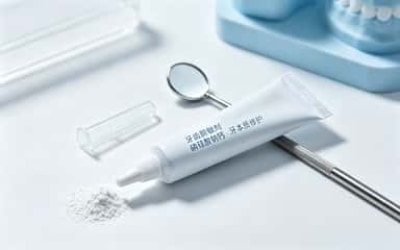
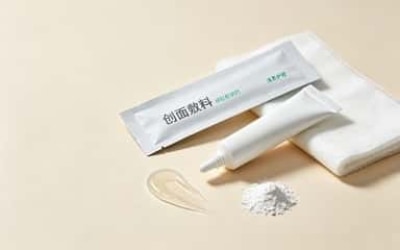
EPRUI Biotech Co. Ltd. has achieved scalable manufacturing of 45S5 bioactive glass. Our products meet heavy metal limits comparable to those of NovaMin-grade bioactive glass. We offer you high-quality 45S5 bioactive glass at a competitive price.